The Bigger Number Isn't Always the Better Buy: Untangling CBD Strength and What You Actually Pay
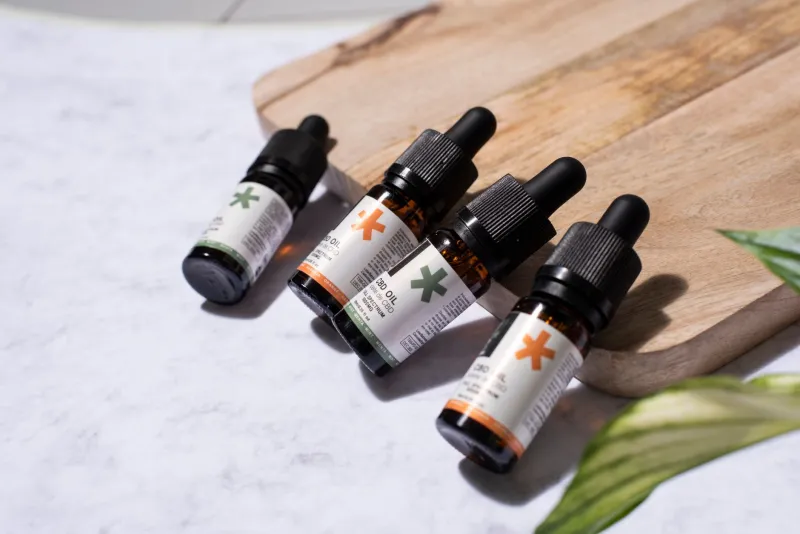
Walk into any UK health shop and you'll see the same thing: a shelf of little amber bottles, each with a percentage stamped on the front like a badge of honour. 5%. 10%. 20%. The unspoken message is that bigger equals better, and the price tag usually plays along.
The trouble is that the percentage is one of the least useful numbers on the bottle for working out what you're actually getting. It says something real, but it's only half of a sentence. The other half is the size of the bottle — and the two together decide what you're really paying.
Let's untangle it, calmly, without a single equation that needs a calculator app.
What the percentage is actually telling you
A 5% CBD oil means 5% of the bottle's contents is CBD. That's it. It's a concentration, not a dose.
The easiest way to make it human: think of it as milligrams per millilitre. Every 1% equals roughly 10mg of CBD in each millilitre of oil. So a 5% bottle carries about 50mg per ml, a 10% bottle about 100mg per ml, and so on up the ladder.
Now here's the bit the front label tends to hide. Concentration doesn't tell you the total amount in the bottle, because bottles come in different sizes. A 10ml bottle at 5% holds around 500mg of CBD in total. The same 5% in a 30ml bottle holds roughly 1,500mg. Identical percentage, three times the CBD, wildly different value.
Some brands do print the milligram total on the back — "500mg CBD" or "1,500mg CBD" — and when they do, thank them. It's the number worth hunting for.
Milligrams per bottle versus milligrams per drop
Two more numbers live on that bottle, and they matter for different reasons.
Milligrams per bottle is your value number. It's what you compare when you're standing in the shop or squinting at a product page, because it lets you work out price per milligram.
Milligrams per drop is more of a practical number. A standard dropper tends to deliver around 20 drops per millilitre, though this varies with the dropper, the oil's thickness and how generous your squeeze is. So a 5% oil (50mg per ml) works out at roughly 2.5mg per drop, and a 10% oil (100mg per ml) at roughly 5mg per drop.
That difference explains why people sometimes find a stronger oil feels like more faff-free value: fewer drops to bother with. But it also cuts the other way. Higher strength means each drop carries more, so the margin for error in how many drops you use gets tighter, not looser. Which is worth knowing before you assume stronger is simply better.
Why a 5% bottle can cost more per day than a 10% one
Take two bottles on the same shelf.
Bottle A: 10ml at 5%. That's about 500mg of CBD in total, priced at £28.
Bottle B: 30ml at 10%. That's about 3,000mg in total, priced at £65.
At a glance, Bottle A looks like the budget option. It's half the price. But divide price by milligrams and the picture flips.
| Total CBD | Price | Cost per mg | |
|---|---|---|---|
| Bottle A — 10ml, 5% | ~500mg | £28 | ~5.6p |
| Bottle B — 30ml, 10% | ~3,000mg | £65 | ~2.2p |
Bottle A costs roughly two and a half times more for every milligram you get. If you're using the same amount each day, the small bottle empties far sooner and you're back at the till while Bottle B is still half full. The cheap-looking bottle was the expensive one all along.
That's not an argument for buying the strongest thing you can find. It's an argument for doing one division before you commit.
A four-step comparison you can do on your phone
Next time you're weighing up two bottles, run this in your head — or in the notes app, no judgement here.
- Find the total milligrams. If it's printed, use it. If not, multiply the percentage by 10 to get mg per ml, then multiply by the bottle size in ml.
- Note the price. Including delivery, because postage is part of what you're paying.
- Divide price by total milligrams. That gives you pence per milligram.
- Sanity-check the practical side. Bigger bottles last longer but have a shelf life. If it'll take you eight months to get through 30ml, factor that in honestly.
Four steps, thirty seconds, and you've just seen past the biggest number on the label.
Things the ladder won't tell you
Strength maths is useful, but it's only one slice of the decision. A few things it can't answer:
- What suits you. How much CBD a person uses is a personal matter, and it's a conversation to have with a pharmacist or your GP rather than a number on a bottle. We're firmly in the business of explaining labels here, not suggesting how much to take.
- Whether the label is honest. Look for a batch number, a clear milligram figure, and a UK responsible person named on the packaging — the Novel Food rules have made that a bit more common, though not universal.
- What else is in the oil. Carrier oil, flavourings and the full-spectrum versus isolate question all affect your experience, and none of them show up in the percentage.
The takeaway, minus the maths panic
Percentages are a concentration, bottles are a volume, and your wallet cares about the product of the two. Work out total milligrams, divide the price by it, and the shelf suddenly gets a lot less mysterious. Sometimes the little 5% bottle is the sensible pick — for a first try, say, or a top-up before a trip. Just don't let the font size make that decision for you.