Three Jars, One Question: A Kitchen-Table Guide to Full, Broad and Isolate CBD
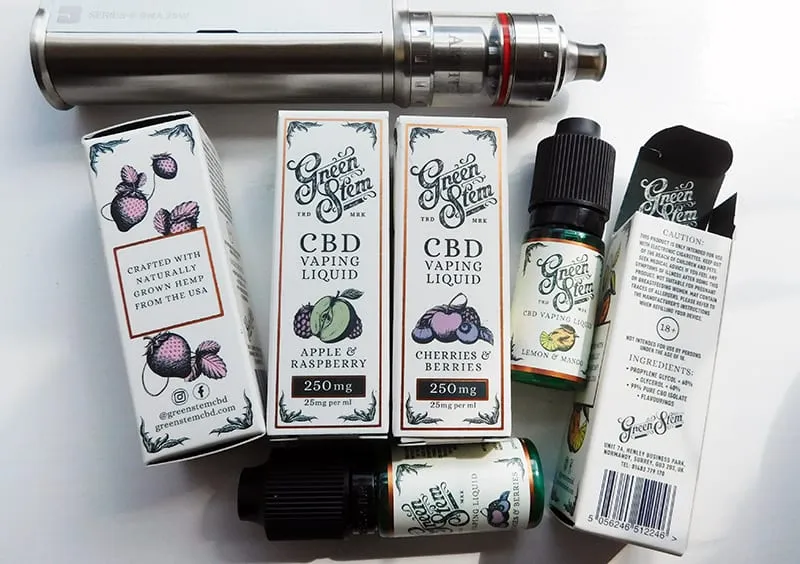
Photo: Ecig Click, CC BY-SA 2.0, via Wikimedia Commons
Walk into a UK CBD shop, or scroll through a stockist's website, and you'll meet the same three words again and again: full spectrum, broad spectrum and isolate. They sound technical. They sound like they should come with a white coat. In reality, they're closer to the language on a bag of flour or a carton of juice. They describe what's in the product, not how strong it is, not how well it works and not whether it's right for you.
At Hemplex, we like to keep this stuff plain. So here's the kitchen-table version, with no lab jargon and no miracle claims.
The labels are recipes, not rankings
Think of a CBD product as something made in a kitchen. The starting point is the hemp plant. The finisher is the bottle, capsule, tub or spray you actually buy. Full, broad and isolate describe how much of the plant's other bits have been kept or removed along the way.
None of those words means 'stronger'. A full-spectrum oil at 5% is not automatically more powerful than an isolate oil at 10%. A broad-spectrum capsule is not a premium upgrade just because the word sounds broader. These are descriptions of the recipe, not a league table.
Full spectrum: the whole-fruit smoothie
Full spectrum is the whole-fruit smoothie of the CBD shelf. It contains CBD plus the other cannabinoids, terpenes and plant compounds that naturally come along with it, including trace amounts of THC. That's the key point to understand: full spectrum usually means THC is present, even if only in small quantities.
In the UK, THC is a controlled substance, and CBD products sold legally are expected to stay within strict limits. That's one reason you should look for clear batch information rather than assuming 'full spectrum' is automatically fine. The label should tell you what's in the bottle, and a reputable retailer should be able to point you to a certificate of analysis, often called a COA, for the batch.
Full spectrum is not a magic word. It doesn't mean 'more effective'. It doesn't mean 'medical grade'. It just means the product keeps more of the plant's natural mix.
Broad spectrum: the strained smoothie
Broad spectrum sits in the middle. It's often described as containing a range of cannabinoids and plant compounds but with THC removed or reduced to a level the maker considers negligible. Think of it as a smoothie with the seeds strained out: you still get a blended drink, but a key ingredient has been taken away.
Here's the catch: broad spectrum isn't a single legal definition with one universal recipe. One brand's broad spectrum may be quite different from another's. Some makers remove THC entirely. Some remove it to a very low level. Some use the term loosely. That's why the word on the front of the bottle is only a starting point. You still need to know how much CBD is in the product, what else is in it and whether the batch has been tested.
If you're avoiding THC for personal or professional reasons, don't rely on the phrase broad spectrum alone. Ask for the numbers. A good retailer will understand the question.
Isolate: the single-ingredient flour
Isolate is the plain flour of the group. It is CBD on its own, usually in a purified form, without the other cannabinoids, terpenes and plant compounds that come with full or broad spectrum products. It's the simplest recipe to understand: one main ingredient, mixed with a carrier oil or put into a capsule or topical product.
Isolate is often chosen by people who want to know exactly what they're taking, or who want to avoid THC entirely. But simple doesn't automatically mean better. It also doesn't mean tasteless, odourless or identical from brand to brand. The carrier oil, the strength, the bottle size and the quality of the starting material all still matter.
What the terms don't tell you
This is where a lot of UK shoppers get caught out. The spectrum word tells you about the plant mix. It does not tell you:
- how much CBD is in each drop, capsule or serving;
- how much THC is in the batch;
- whether the product has been tested by a lab;
- whether the label matches what's actually in the bottle;
- what carrier oil or flavourings have been used;
- whether the product is listed under the UK's Novel Food rules;
- whether it's right for you, your medication or your routine.
That's a long list, but you don't need to memorise it. You just need to know that 'full spectrum' is not a substitute for reading the back of the label.
Format matters more than the buzzword
A full-spectrum oil, a broad-spectrum capsule and an isolate topical are not interchangeable. They're different products with different uses and different label information.
An oil is usually taken under the tongue, so the number of drops and the mg per ml matter. A capsule gives a fixed amount per capsule, which some people find easier to track. A topical is for the skin, not for swallowing, and its CBD content is measured differently. A drink or edible will have its own serving size and storage instructions.
Before you compare full, broad and isolate, compare like with like. Two oils with the same spectrum word can still have very different amounts of CBD per bottle. The spectrum is one part of the picture; the dose and format are the rest of it.
Questions to ask before you pay
In 2026, the UK CBD shelf is crowded, and the labels are often more enthusiastic than informative. A sensible retailer should be able to answer a few straightforward questions without huffing.
Ask: How much CBD is in each serving? How much THC is in this batch? Can I see the certificate of analysis? Is this product on the UK Novel Food list? What's the carrier oil? And what's the batch number on the bottle I'll receive?
If the person behind the counter can't answer, that's useful information. It doesn't automatically mean the product is bad, but it does mean you're being asked to buy on vibes. For a product you're putting in your body, vibes are not enough.
The kitchen-table verdict
Full spectrum, broad spectrum and isolate are useful shorthand, but they're not a quality score. They're recipe words. Full spectrum keeps more of the plant's natural mix, broad spectrum usually removes or reduces THC, and isolate is CBD on its own. None of them tells you the strength, the dose, the safety checks or the right choice for you.
So treat the label like the front of a cereal box: helpful for a first glance, but not the whole story. Turn it round, read the small print and ask questions. That's how you buy CBD in the UK without paying for a word that sounds impressive and tells you very little.